Agents Need a Nervous System

Over the past few months there’s been a lot of noise around AI agents. Some people are calling it hype, others are trying to automate everything overn...
Over the past few months there’s been a lot of noise around AI agents. Some people are calling it hype, others are trying to automate everything overnight, and many are running into the same reality. Agents are not magic. They don’t just work because you give them a prompt, and they don’t suddenly become reliable because you connect a few APIs. Getting them to actually work in a real business, over and over again, still takes real effort.
At the same time, OpenClaw is not just hype. What it did was expose something that a lot of people were not fully thinking about, even if technically it already existed. You could already wire together cron jobs, deterministic systems, and LLMs to automate tasks. That was always possible. But seeing it packaged in a way where an agent is running, responding, acting, and interacting with systems made something click. It showed that if you give an LLM a body and a defined environment to operate in, it can go much further than just answering questions. It can actually start doing work. Not perfectly, not reliably every time, but enough to matter. Enough to compress what used to take weeks into days if you know what you’re doing.
Before this, I wasn’t really thinking about it that way. I was thinking agents just needed tools. Give them APIs, give them access, and they’ll figure it out. But that’s not enough. What became clear is that agents don’t just need tools, they need a system to live in. They need structure, context, permissions, and boundaries. They need something closer to a nervous system than a toolbox.
That’s where Kanvas starts to make a lot more sense in this new world. Kanvas was never built for agents. It was built because we had to solve a real problem inside our own company. We were dealing with multiple systems, disconnected workflows, and too much manual coordination between teams and tools. We needed a way to connect everything, standardize how things run, and reduce the amount of repetitive work. That’s why Kanvas exists as this middle layer that connects systems and operations.
Now when you combine that with agents, things start to feel very different. If you take agents with clear roles, like you would define roles for people in a company, and you plug them into a nervous system that gives them access to real data, real workflows, and controlled permissions, you don’t get a demo. You get something that can actually execute work. It’s not about one agent doing everything. It’s about having multiple agents, each responsible for a specific part of the business, operating inside a system that keeps everything connected and consistent.
Some people will say this was already possible, and they’re not wrong. You could build all of this manually. But what’s changed is visibility. More people are starting to see what’s possible, and that matters. The hype didn’t create the capability, but it did create awareness. And now the opportunity is to move from experiments into real use cases that actually help businesses operate better.
That’s what we’re focused on right now. Not theory, not demos, but real execution. We’re already using this internally at MCTEKK, connecting agents to actual workflows and measuring where they save time and reduce manual work. We’re doing the same with our customers, focusing on specific use cases where this approach actually makes a difference instead of trying to automate everything at once.
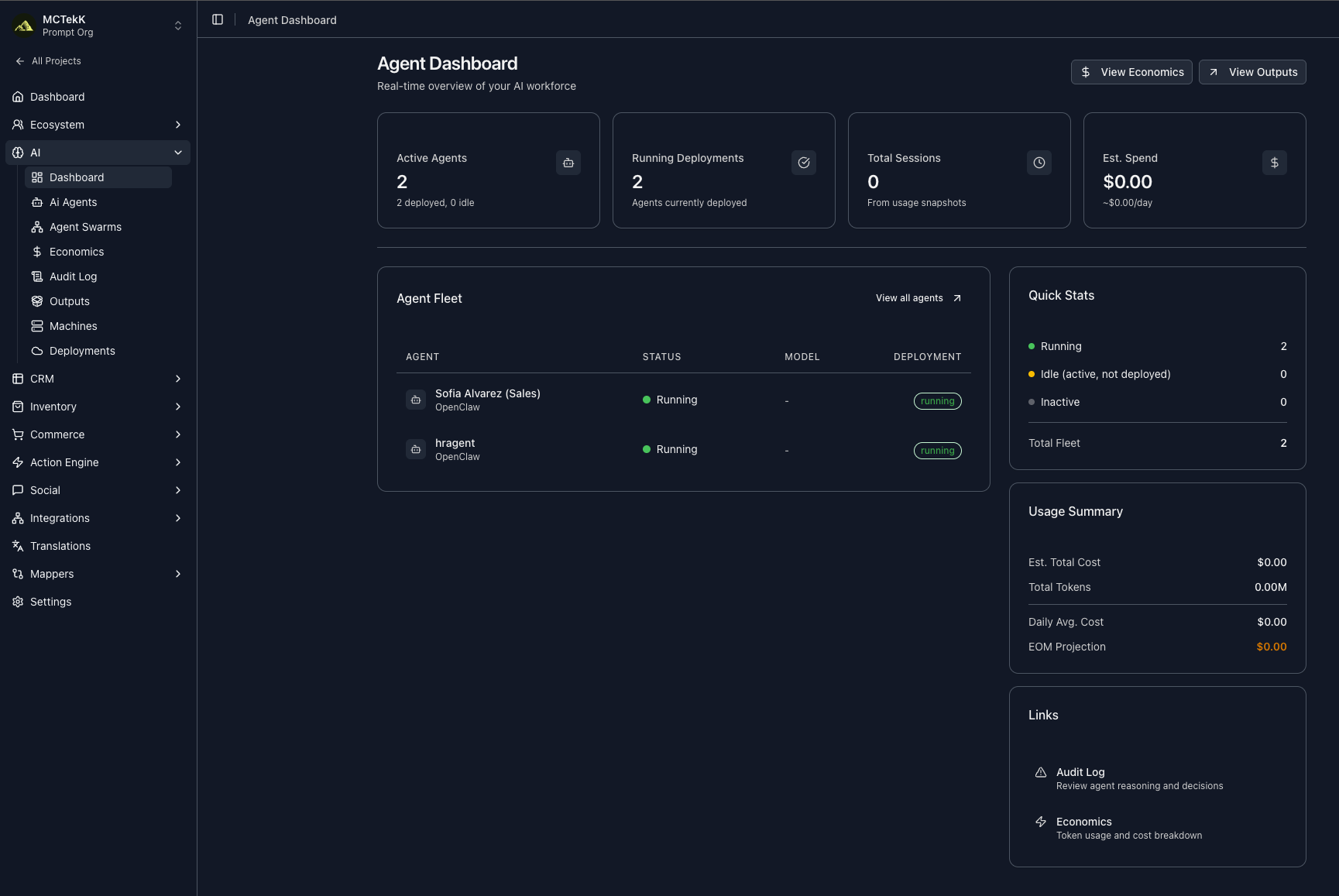
In our April release, we’re going to start showing this more clearly. Not just talking about agents, but showing how this nervous system is helping run operations, where it’s working, where it still needs improvement, and how businesses can start applying it in a practical way.
Because at the end of the day:
Agents don’t matter unless they help your business run better.